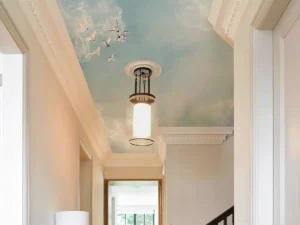
It's curious, because if we flip through any interior design magazine or spend a few minutes browsing social media, it seems that all the houses in the world have very high ceilings, endless windows and spaces that breathe spaciousness. But the reality—the one we see when we visit real projects or clients' homes—is quite different. Most homes have rather moderate heightsSometimes even a little tight. And that, far from being an insurmountable problem, is simply a condition of the space with which we can work.
In fact, with some well-thought-out interior design decisions, we can alter the perception of space in a surprising way. We're not going to physically raise the ceiling, of course, but we can make the space feel taller, lighter, and much more comfortable to live in.
I'm going to share with you some resources that, in practice, work very well.
1. Use lighting as an ally
Lighting is probably one of the most undervalued resources when we talk about spatial perception. However, when a ceiling is low, Light can completely change the feeling of the atmosphere..
A fairly common mistake—I see it frequently in projects—is placing pendant lights too low or ceiling fans in rooms that already have limited ceiling height. Not only do they visually reduce the space, but they also create a feeling of heaviness above our heads. And yes, they're also responsible for more than one accidental bump.
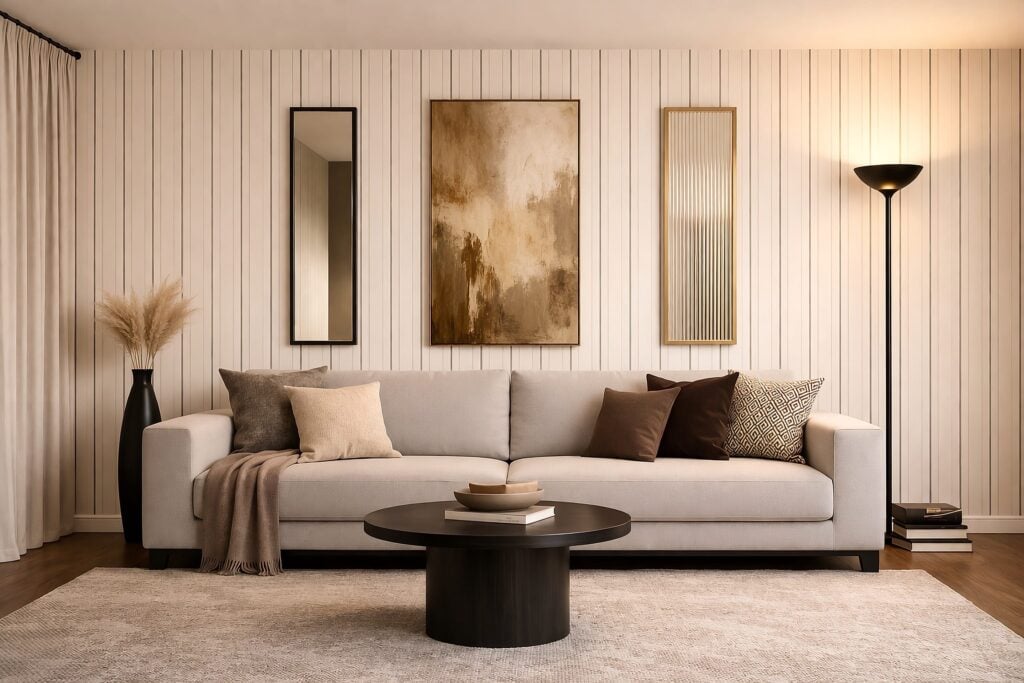
In these cases, it's best to accept the reality of the space and work with it. The lighting fixtures recessed in ceiling or wall They work much better because they keep the upper surface clean. Floor lamps or lights that project the beam upwards are also very useful.
This little trick has an interesting effect: when light bounces off the ceiling, Our eye perceives that plane as being farther away., almost as if it were floating a little higher than it actually is.
2. Low furniture… but tall storage
When a space has low ceilings, the furniture can work for or against it. And here there's often a very human temptation: to choose medium-sized furniture to avoid "taking a risk." But curiously, that middle ground is usually the one that works worst.
Furniture that is halfway up the wall —neither low nor high— visually fragment the wall and make the short distance between floor and ceiling more evident.
That's why going for extremes often works better. On the one hand, low-profile sofas, beds and chairswith discreet backrests or even without them, visually freeing up the space. On the other hand, when we talk about storage, the opposite happens: shelves or cabinets that arrive from floor to ceiling They help create a continuous line that visually lengthens the wall.
It's a little trick of perception, but it really works. Our brain interprets that vertical continuity as greater height.
3. Blur the boundary between wall and ceiling
There is a color choice that seems small, but it greatly changes the perception of a room: how do we treat the meeting point between walls and ceiling?.
When we use different colors on each plane, we clearly mark where the wall ends and the ceiling begins. In spaces with high ceilings, this can add character, but in low ceilings, it often has the opposite effect. It highlights the lack of height.

Therefore, a very effective solution is to use the same tone on both surfaces or very similar tones. In this way, the boundary becomes blurred and the eye does not detect the change in plane as clearly.
In addition, light colors help a lot. And here it's important to clarify something: we're not necessarily talking about pure white. Today there are many off-whites, soft creams, and very luminous pastel shades that create a sense of spaciousness without the cold or clinical feeling that absolute white sometimes has.
If to this we add slightly darker floorsThe contrast further reinforces the perception of height.
4. Divert attention (yes, like a magic trick)
In interior design there is a principle very similar to that of illusionists: If you control where people look, you control what they perceive..
When a ceiling is low, the last thing we want is for the gaze to be constantly drawn upwards. So a very effective strategy is to create points of interest closer to the ground.
This can be achieved with some rugs with character, cushions with interesting prints, a textured piece of furniture or even a work of art placed at a strategic height.
However, for that accent to work well, the rest of the space should remain relatively neutral. Think of the walls as a calm canvas that allows those small focal points to take center stage.
The result is curious: attention is focused where we want it to be, and the ceiling ceases to be the protagonist of the space.
5. Harness the power of vertical lines
Finally, there's a classic design resource that continues to work just as well as ever: the vertical lines.
Our brain interprets these lines as height cues. That's why, when we strategically place them in a room, the perception of space changes.
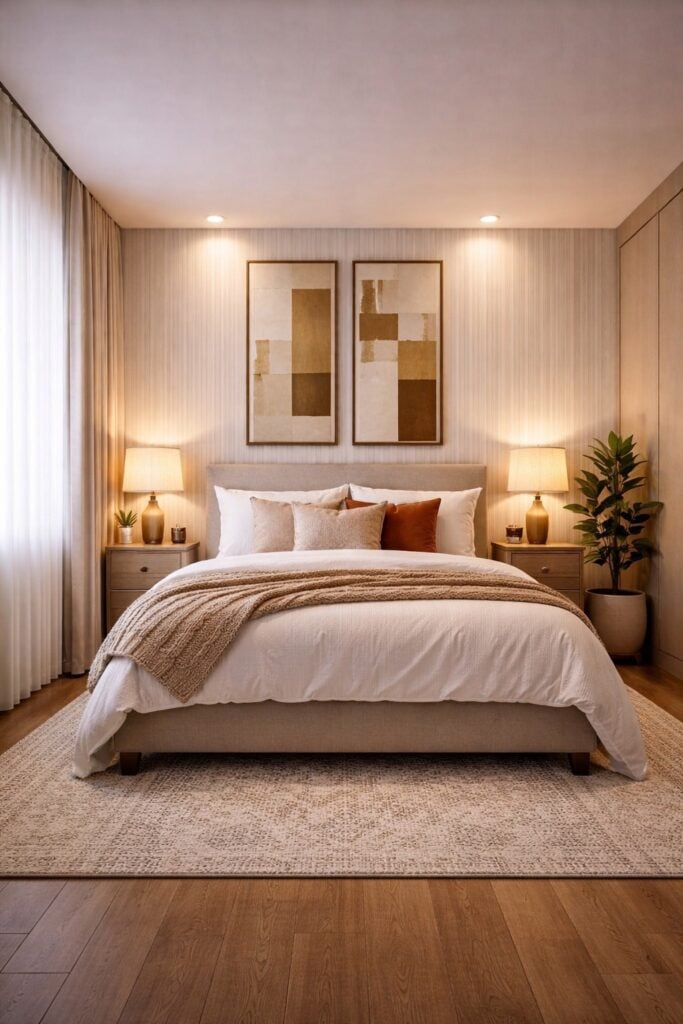
This can be applied in many ways. For example, by using elongated paintings or mirrorsInstalling the curtains close to the ceiling (and not above the window) with a long vertical drop, cplacing a striped wallpaper vertical, or even incorporating tall plants with long leaves that complement that upward direction.
One detail that usually enhances this effect is superimpose planesImagine, for example, a low bench in front and, behind it, a wall with vertical elements. The contrast between the two heights makes the whole ensemble appear taller.
And at that moment something interesting happens: the ceiling stops seeming low… it simply goes unnoticed.
Summarizing
For low ceilings:
- Paint the ceiling the same color as the rest of the room to disguise the height difference.
- Decorate the walls with paintings or vertical mirrors.
- Combine low furniture with storage up to the ceiling.
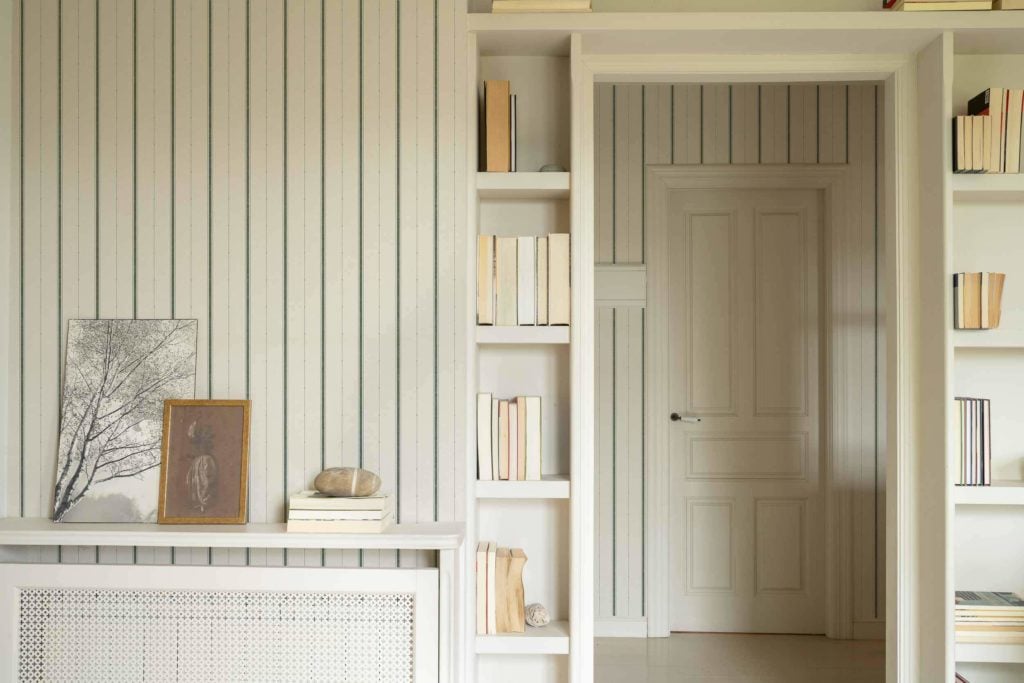
- Use vertical stripes, they make the ceiling appear higher.
- Don't paint the ceiling dark, it makes it look lower.
- Install the curtains on the ceiling (and not over the window).
- Use decorative plants with tall stems.
- Light up the ceiling to make it appear taller.
- Avoid using pendant lamps.
Do you understand the idea?
Interior design has something fascinating about it: often it's not about changing the architecture, but about interpret it intelligently.
A low ceiling may seem like a limitation at first, but with the right choices in lighting, furniture, color, and visual composition, that same space can feel much larger, more balanced, and above all, more welcoming.
And in the end, that's what good design is really about: creating homes where people feel comfortable, welcome, and at ease.