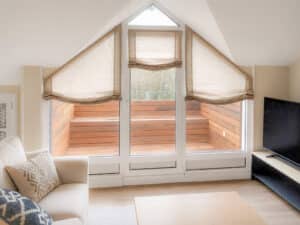
They say that light is one of the most valuable elements in decoration. It's something alive; we can observe how it changes throughout the hours of the day and throughout the seasons.
Natural light completely transforms how we experience a space. It has the power to create atmospheres and evoke emotions. It can make a living room more serene or a more stimulating or sophisticated space.
With the exception of artificial lighting, few decisions influence the atmosphere of a house as much as the way in which we filter the entry of natural light.
Therefore, when it comes to choosing a technical blind, many doubts revolve not only around the mechanism or the color of the screen.
The real difference may lie in a detail unknown to some: the degree of openness.
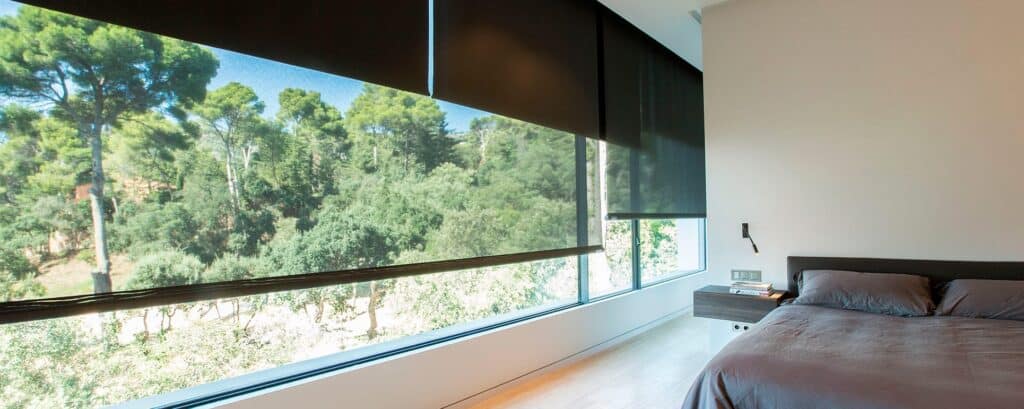
What is the degree of openness?
The degree of openness or porosity refers to the percentage of microperforation that has the screen fabric or PolyscreenPut more simply: it determines how much light passes through the blind and how much visibility it offers from the outside.
In short, the higher the percentage of openness, the greater the visual connection with the outside and the more light enters the room.
Conversely, smaller openings provide greater privacy and more pronounced light control.

Understanding how the degree of openness works allows you to choose a much more suitable blind. consistent with the layout and orientation of the house.
In collections such as bandalux polyscreen 351, bandalux polyscreen 550, polyscreen 314 o polyscreen 350The different degrees of opening significantly influence the final result.
For example, a fabric with a high degree of openness favors interiors that are open to the outside and well-lit, especially interesting in large windows that are not very exposed to the neighborhood.
In contrast, tighter openings provide a more intimate feel and a more diffused and enveloping light, often used in bedrooms or rest areas.


It is important to consider that, in this sense, the orientation of the house is fundamental.
A south-facing living room does not need the same filtering as a room with indirect sunlight or a home located in an urban environment with nearby buildings.
The architectural aspect directly influences the choice, as it conditions:
- The entry of natural light.
- The indoor temperature sensation.
- The level of privacy.
- Visual perception of the outside from the inside and vice versa.
- The atmosphere that we evoapprox.
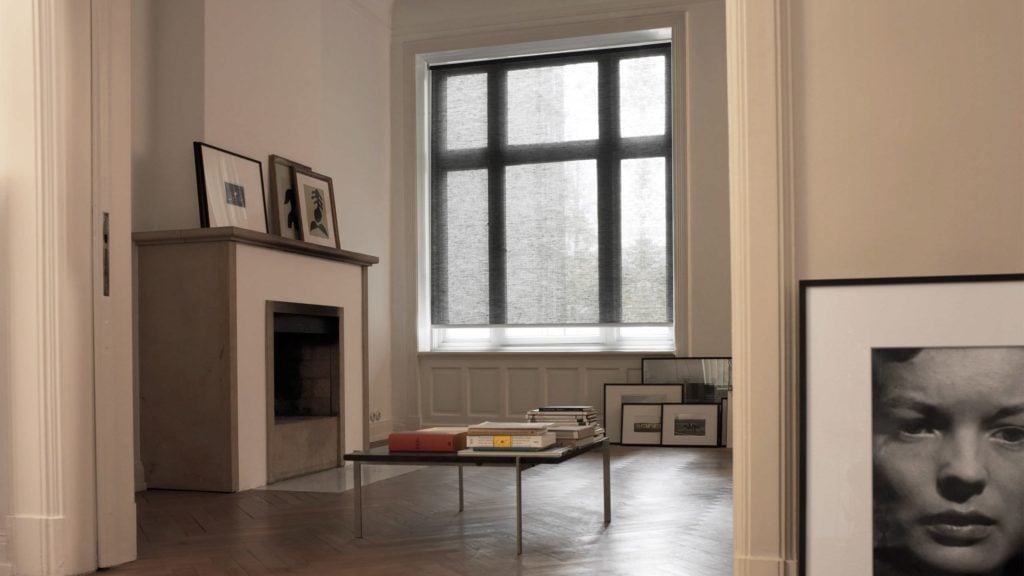
So, before choosing a screen, it's a good idea to observe and think about the following:
- What is the orientation of the house?
- What is the intensity of natural light in each window?
- The level of privacy required in each space.
- The atmosphere you want to create in each room.
How many degrees of opening are there?
While it can vary slightly depending on the brand or collection, screen fabrics typically operate on a scale of 1% to 10%. Each one creates a completely different experience.
Opening 10%
It is the most open option, letting in plenty of light and offering greater visibility to the outside.
The interior feels very bright and airy, at the cost of little sun protection and reduced privacy.
It is usually used in very specific spaces where the views are very important or where the sunlight is not direct.
Opening 5%
The 5% aperture lets in more light and is more permissive with visibility to the outside and vice versa.
It creates light, well-lit and visually spacious areas, especially interesting in homes with large windows or open views.
This type of opening is often used in: bright attics, offices, spaces, for example, with North-facing.
Opening 3%
It is probably one of the most balanced options.
It allows ample natural light while maintaining privacy. Visually, it preserves a connection with the outdoors.
It is very common in living rooms, open kitchens and daytime areas where a bright but pleasant atmosphere is desired.
Opening 1%
It is the most enclosed option and the one that offers the greatest solar control and privacy.
The light enters in a much more diffused way, creating serene and visually very comfortable environments. This is especially appealing in bedrooms, media rooms, or homes with intense sunlight.
In decorative terms, fabrics with 1% openness create private and relaxed environments where a pleasant dimness reigns.
In summary, models with smaller openings prioritize privacy, thermal comfort, and solar control.
The most open ones enhance the brightness and the visual connection between the interior and exterior.

Blackout Blinds
It is worth mentioning here the blackout blinds and explaining what differentiates them.
Blackout blinds are those specifically designed to block light and darken and protect the interior, providing total privacy.
To understand, The screen fabric of a blackout blind has no micro-perforations whatsoever, neither big nor small, so it literally doesn't let any light through.
If we want additional thermal protection, we can coat the exterior of the blind with an aluminum layer which reflects sunlight and can consequently reduce the indoor temperature by a few degrees.

Light as part of interior design
In interior design, light is never considered a secondary element. It redefines colors, modifies textures, and completely shapes the perception of space.
And it has a direct connection to your emotions and those of your family. It's about deciding how you want to live and feel at home.
Soft, diffused light can transform a bedroom into a serene haven. A wider opening can make a living room feel spacious, open to the outdoors, and enjoy cheerful light.
In interior design, atmospheres are not improvised. They are designed. And few decisions influence that final feeling as much as the degree of openness of the screen chosen for your newevoroller blinds.